Exposing the Digital Legal Trolling Machine: How Automated Privacy Scams Work—And How To Shield Your Enterprise

In today’s digital ecosystem, threat actors are no longer the only risk to online operations. A parallel threat is actively expanding: automated digital legal trolling.
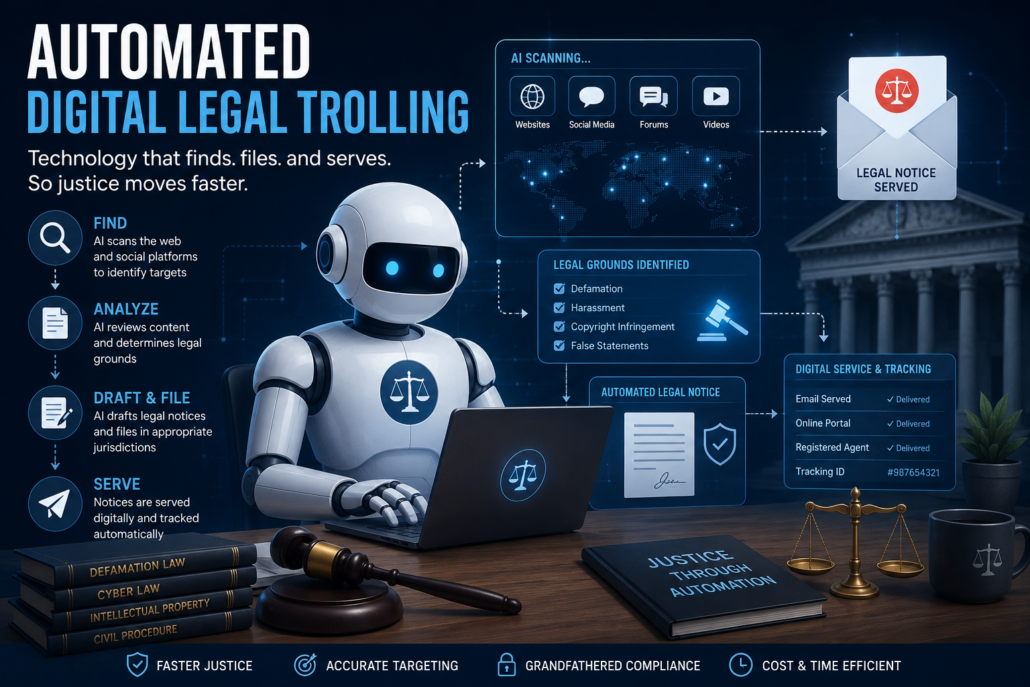
automated digital legal trolling

Recently, we were contacted in regards to a small mom and pop organization that became the target of a high-volume demand letter accusing their web property of non-compliance with privacy regulations (specifically regarding the deployment of third-party media embeds like YouTube, and underlying tracking scripts).

While these notices appear threatening, analyzing their mechanics reveals an automated, predatory harvesting model designed to trigger immediate financial settlements. We are sharing an operational response guide to expose how these campaigns work and demonstrate how to actively neutralize the risk.

1. Deconstructing the Scam: How Automated Trolls Target Web Infrastructure

These demand letters rely on automated harvesting tools rather than human legal review:

  • Generating Automated Legal Notices: Upon flagging a domain, automated scripts are instantly filling form templates with page URLs and legal boilerplates to simulate individual manual audits.
  • Leveraging Fear of Statutory Fines: The notices are intentionally threatening immediate legal action, calculating that business owners will choose a quick settlement over consulting legal counsel or auditing their technical stack.
  • Ignoring Active Compliance Engines: Scanners are frequently ignoring active client-side script blockers, local caching layers, or privacy frameworks, claiming a compliance violation where none exists or where minimal risk is present.

2. Active Technical Mitigation: How To Eliminate Risks and Remove Vulnerable Plugins

To neutralize any exposure and achieve strict compliance across your web properties, businesses must execute a systematic overhaul of your privacy architecture and consent management engines. This is a time intensive process that looks complicated, but with the right tools at your fingertips, it’s entirely manageable, even by relative novice do it yourself small business and is absolutely worth your attention to shield you from this real risk.

Running this article through your own LLM of choice will serve as a step-by-step blueprint. Mind you, this is not legal advice, this is not 100% fool proof, this is a guide that is designed to point you in the right direction, and if you truly truly want to 100% mitigate your risk, contact your legal council.

Here is exact timeline of actions that must be taken:

Step 1: Deleting High-Risk and Redundant Plugins

  • Auditing Administrative Tools: Actively reviewing all installed WordPress plugins and deactivating unneeded administrative utilities—specifically tools like File Manager Advanced—that are frequently flagged during automated security scans and serve as primary triggers for automated legal letters.
  • Uninstalling Inactive Assets: Completely removing unneeded plugins from the server rather than leaving them deactivated, ensuring their underlying code assets and scripts cannot be indexed or exploited by crawlers.

Step 2: Eliminating Raw Embeds and Sanitizing Links

  • Isolating Unconsented Script Triggers: Locating all legacy media embeds across primary landing pages (/about-us, homepages) to stop unconsented tracking calls prior to user authorization.
  • Converting to Privacy-Enhanced Endpoints: Re-writing raw YouTube embed URLs across the database to use privacy-enhanced endpoints (youtube-nocookie.com), explicitly blocking DoubleClick tracking telemetry prior to user interaction.

Step 3: Deploying Dynamic Script Blocking via Complianz

  • Cataloging Active Cookies: Running site-wide scans to index active cookies, fonts, and scripts across WooCommerce, form plugins, and page builders.
  • Enforcing Dynamic Script Interception: Utilizing a dedicated consent management engine like Complianz to dynamically wrap third-party elements—including Google Analytics, YouTube, Google Fonts, and reCAPTCHA—blocking execution until explicit visitor consent is recorded.
  • Synchronizing Policy Databases: Syncing all detected scripts with open databases (like Cookiedatabase.org) to automatically populate verified cookie descriptions on public policy documents.
  • Publishing Compliance Documentation: Generating required regulatory pages, including standard Opt-out preferences documents, and integrating them directly into footer navigation menus.
  • Activating Global Consent Banners: Enabling live user consent banners across all web properties, ensuring strict compliance enforcement on every incoming visit.

3. Coverage Analysis: How Dynamic Blocking Handles Deep Subpages

A critical question when managing site-wide privacy is whether every single subpage requires manual inspection:

  • Dynamic Theme-Level Interception: Operating the script-blocking engine at the theme/header level ensures that even on deep subpages that haven’t been manually audited, the system is dynamically intercepting and holding scripts before they can execute in the browser.
  • Managing Scanner Index Limits: While free scanning tools typically index up to 50 pages for initial cookie inventory generation, the underlying script blocker is continuously protecting 100% of incoming traffic across all subpages.
  • Ensuring Total Fallback Protection: Combining dynamic script blocking with site-wide database sanitization ensures complete coverage across deep subpages and custom post types.

4. Ongoing Action Plan: Maintaining a 100% Risk-Free Environment

To maintain a hardened, risk-free posture against automated legal bots moving forward, organizations should commit to the following ongoing protocol:

Technical Verification Actions

  • Purging Server and Plugin Caches: Regularly clearing host-level caching (such as WP Engine) and plugin caches (like WP Rocket or W3 Total Cache) to ensure legacy pre-rendered pages are never served to visitors or crawlers.
  • Executing Incognito Verification: Periodically testing inner subpages in Incognito mode to confirm media players remain locked behind consent placeholders until explicit user approval.

Database and Asset Hardening

  • Executing Database Search-and-Replace: Running database search-and-replace routines using utilities like Better Search Replace:
  • This guarantees that even if a client-side script blocker fails, the underlying iframe natively defaults to privacy mode.

Content Publishing & Plugin Hygiene

  • Enforcing Privacy-Enhanced Media Standards: Establishing strict publishing guidelines requiring all newly embedded video or audio assets to utilize youtube-nocookie.com or privacy-enhanced embed codes.
  • Conducting Monthly Plugin Audits: Reviewing installed plugins monthly to deactivate and delete non-essential administrative utilities before they can create new attack vectors.
  • Updating Cookie Inventories: Re-running compliance scans following any plugin or analytics modification to maintain accurate, audit-ready compliance logs.

Seeking the Right Technical Experts: What Your Defense Team Needs

Should you receive a demand letter, when escalating a privacy dispute or preparing a forensic defense, standard web design knowledge is insufficient—you must engage specialized software engineers who can analyze both sides of the application stack. Properly auditing your exposure requires a front-end software engineer to evaluate client-side code, cookies, and browser-level tracking behaviors, alongside a back-end software engineer to analyze the server-side code and data handling logic where the website is hosted.

Because many server environment nuances dictate liability, a crucial preliminary step is establishing hosting architecture: if the site operates on a third-party managed host, server-side data processing may fall under the hosting provider’s infrastructure rather than the site itself. Conversely, if back-end analysis proves the server does not store, transmit, or process the intercepted data, the flagged cookie is functionally a “dead end”—created on the front end, but utilizing no back-end data stream.

While a qualified full-stack engineer can occasionally handle both domains and serve as an expert witness, organizations should carefully vet qualifications and engage separate front-end and back-end forensic specialists if there is any doubt regarding full-stack expertise.

Conclusion: Taking Control of Your Digital Posture

Navigating the modern web means recognizing that automated legal harvesting tools are here to stay. These predatory bots will continue crawling millions of domains daily, fishing for unconsented scripts, legacy embeds, and administrative oversights. While receiving a high-demand notice is unsettling, these letters should never be ignored. Ignoring them can turn a minor technical oversight into an escalated dispute, whereas taking immediate, documented action effectively neutralizes their leverage. By executing a systematic technical cleanup—deleting high-risk plugins, converting legacy embeds to privacy-enhanced endpoints, and deploying site-wide script blocking—you transform your web properties from low-hanging targets into hardened, compliant assets.

Disclaimer: The information provided in this article is for educational and technical risk-mitigation purposes only and does not constitute formal legal advice. Privacy regulations and enforcement standards vary by jurisdiction. If your organization receives a formal legal notice or demand letter, you should consult with a qualified legal professional to evaluate your specific circumstances.

Robert Siciliano, CSP, CSI, CITRMS—recently named one of the 50 Best Cybersecurity Keynote Speakers—is a #1 Amazon best-selling author, CEO of Safr.Me, Head Trainer at ProtectNowLLC.com, and the Architect of The Strategic Human Firewall™. Grounded in his 30+ years of real-world expertise, this content was developed using advanced predictive research tools, with every framework, strategy, and security protocol authored and verified directly by Robert.

The Real Estate Agent’s Playbook: Preventing Closing Wire Fraud and Protecting Your Clients

In modern real estate transactions, the real estate agent serves as the trusted guide between buyers, sellers, title companies, and lenders. However, as transaction workflows have shifted heavily into digital spaces, cybercriminals have targeted the closing process. Through Business Email Compromise (BEC), phishing, synthetic impersonation, and altered payment instructions, bad actors systematically exploit communication gaps to intercept closing funds, earnest money deposits, and seller proceeds.

The Real Estate Agent’s Playbook: Preventing Closing Wire Fraud and Protecting Your Clients

For real estate agents, protecting your clients isn’t just an administrative chore—it is an essential operational responsibility. Preventing wire fraud requires moving beyond passive awareness and adopting standardized, non-negotiable security protocols across every stage of the real estate lifecycle.

This best-practices guide outlines how agents can recognize deception tactics, secure their digital communication, educate buyers and sellers early, and verify payment details before a single transfer takes place.

1. Recognize the Red Flags of Real Estate Scams

Cybercriminals rely heavily on social engineering and psychological manipulation rather than brute-force software hacking. By understanding the common mechanics of real estate fraud, agents can identify suspicious patterns early.

  • Slightly Misspelled Email Addresses: Fraudsters routinely register domains that visually mimic a title company, lender, or real estate brokerage. Inspect every character in sender email addresses rather than relying on the displayed sender name.
  • “Updated” or “Revised” Wiring Instructions: Title companies and escrow attorneys rarely change their established banking or wire instructions near closing. Treat any last-minute email or text announcing changes to account numbers, routing codes, or payment procedures as an active wire fraud attempt.
  • Manufactured Urgency and Secrecy: Criminals deliberately create high-stress environments, pressuring buyers or title teams to move funds quickly or bypass standard approval channels to meet an artificial deadline.
  • Requests for Wire Confirmation: Messages asking you or your client to reply with full wire receipts, account verification numbers, or transaction confirmation details via unencrypted email are primary markers of interception schemes.
  • Unusual Language or Syntax: Overuse of formal or awkward phrasing—such as repeated demands to “kindly send payment”—often signals an external scammer operating from an automated script.
  • Vacant Land and Seller Impersonation Scams: Be vigilant when dealing with unencumbered vacant land or non-occupant seller property. Fraudsters search public land records, impersonate legitimate property owners, list properties below market value, demand cash sales, refuse in-person meetings, and attempt to arrange their own remote notarizations.

2. Onboard and Educate Clients from Day One

The most effective line of defense is proactive client education. Buyers and sellers who are informed during the initial meeting are far less likely to succumb to fraudulent instructions sent weeks later.

  • Establish the “First Meeting” Warning: Explain wire fraud mechanics during your initial consultation or buyer presentation. Inform clients explicitly that wiring instructions will be delivered exclusively through secure platforms or confirmed directly with the title company.
  • Outline the Closing Communication Plan: Provide a clear list of trusted closing partners—including the exact names, verified phone numbers, and official domains of the title agent, settlement attorney, and lender. Tell clients to ignore communication from any unlisted entity claiming to represent the transaction.
  • Mandate Out-of-Band (OOB) Voice Verification: Instruct clients never to wire earnest money or cash-to-close based solely on an email, text, or PDF attachment. This is especially true, even when the email comes from a trusted source such as the real estate agent, title company, or their attorney. In some cases, either the buyer’s or service professionals’ email may have been compromised. Emphasize that they must independently look up the settlement agent’s phone number—never using numbers provided inside a suspicious email—and verbally confirm wiring instructions before initiating a transfer.
  • Warn Against Forwarded Financial Screenshots: Tell buyers never to send sensitive banking information or payment confirmations through open SMS or regular unencrypted email threads.

3. Secure Remote Closings and Digital Workflows

As real estate operations transition to digital environments and Remote Online Notarization (RON), remote transaction workflows require heightened vigilance.

  • Enforce Strict Multi-Factor Authentication (MFA): Require MFA across all agent accounts, mobile devices, customer relationship management (CRM) systems, and email platforms. Simple password protection is insufficient to stop sophisticated credential harvesting.
  • Avoid Fragmented Digital Systems: Do not mix unverified third-party file sharing tools, personal email accounts, and unsecured messaging platforms during a closing transaction. Data transfer gaps between unintegrated systems create exposure points where hackers intercept and manipulate files.
  • Verify Remote Signers and Notaries: When conducting virtual closings, ensure the settlement team uses recognized Remote Online Notarization tools that incorporate identity verification, document security, and liveness checks.
  • Never Allow Sellers to Select Unvetted Notaries: For out-of-state or remote property owners, require that the closing attorney or title agency arrange the notary service directly. Reject notarized documents provided by unknown third-party entities without independent verification.

4. Implement Identity and Bank Verification Systems

Manual phone callbacks and static PDF instructions are no longer sufficient protection against automated deception. Real estate practices and settlement partners should adopt dedicated wire verification systems.

  • Deploy End-to-End Encrypted Verification: Partner with title agencies and settlement platforms that utilize dedicated wire verification infrastructure. Systems like CertifID allow settlement agents, buyers, sellers, and attorneys to send, collect, and confirm bank routing details inside an encrypted environment.
  • Utilize Multi-Layer Identity Checks: Ensure closing verification protocols combine device analysis, multi-factor authentication, and knowledge-based authentication (KBA) or government ID verification to confirm the identity of all account holders before wiring funds or seller proceeds.
  • Verify Mortgage Payoff Statements Digitally: Require title partners to use automated mortgage payoff verification tools rather than relying on manual faxed or emailed payoff letters, which are frequent targets for alteration.
  • Inquire About Insurance Backing: Ensure your closing partners utilize wire verification tools backed by direct first-party wire fraud insurance to provide financial protection if an intercepted transfer occurs.

5. Partner with Trusted Industry Professionals

A single weak link in the settlement chain can compromise the entire transaction. Agents must curate and continuously evaluate their network of transaction partners.

  • Screen Lenders and Settlement Companies: Evaluate title companies, escrow agents, and closing attorneys based on their security posture. Ask directly what encrypted tools and identity verification systems they deploy to safeguard client funds.
  • Monitor Misconduct and Feedback: Regularly review news updates, industry reports, and client feedback regarding service providers. Remove any partner from your preferred list if they utilize loose security procedures or unencrypted communication channels for financial data.
  • Maintain Standardized Communication Protocols: Align with closing officers so that all parties follow identical verification steps for earnest money deposits, cash-to-close funds, and seller disbursements.

6. Immediate Response Protocol: What to Do If Wire Fraud Occurs

If a client or partner suspects that wire instructions were falsified or that closing funds were misdirected, rapid execution is critical to recovering stolen money.

  1. Contact the Sending Bank Immediately: Have the client contact their financial institution’s fraud department right away and request a “Wire Recall” or “Fraud Freeze” on the transfer.
  2. Notify Law Enforcement: File a report with local law enforcement and submit a detailed complaint to the FBI’s Internet Crime Complaint Center (IC3).
  3. Notify the Title Company and Brokerage: Inform the managing broker and settlement attorney immediately so they can alert their legal teams, contact receiving banking institutions, and activate specialized recovery protocols.
  4. Engage Specialized Recovery Teams: Work with wire fraud recovery specialists who maintain direct connections with law enforcement agencies and financial institutions to track and freeze diverted assets before they leave domestic clearing networks.

Building an Uncompromised Security Culture

Preventing mortgage wire fraud requires continuous vigilance, clear client communication, and rigid verification habits. By recognizing the red flags of social engineering, educating buyers and sellers at onboarding, eliminating unencrypted email disclosures, and utilizing dedicated closing verification platforms, real estate agents can effectively insulate their transactions. Securing client capital isn’t just about closing a transaction—it is about preserving trust, shielding families from loss, and building a resilient real estate practice.

Ongoing security awareness training turns passive agents into an active defense network, effectively closing the Human Blindspot™. By instilling daily verification habits through The Strategic Human Firewall™, agents build the protective muscle memory required to spot social engineering, defeat synthetic impersonation, and neutralize wire fraud before it strikes. Securing your workflows isn’t just a compliance requirement—it’s the ultimate strategy to safeguard your clients, your reputation, and your practice.

Robert Siciliano CSP, CSI, CITRMS is the Architect of of The Strategic Human Firewall™ a methodology to mitigate the Human Blindspot™. He’s dedicated over 30+ years as a #1 Best Selling Amazon author of 5 books, and the architect of the CSI Protection certification; a Cyber Social Identity and Personal Protection security awareness training program. He is a frequent speaker and media commentator, and CEO of Safr.Me and Head Trainer at ProtectNowLLC.com.

Why Most Security Awareness Training Fails (Hint: It’s Not the Software)

Most security awareness training doesn’t fail because the software is buggy. It fails because it targets checkbox compliance instead of actual human behavior.

If your employees are playing compliance videos on mute in a background tab just to clear a dashboard and generate a completion certificate, your organization remains wide open. While massive automated platforms excel at background infrastructure and logging metrics, they consistently leave the critical Human Blindspot™ unaddressed.

To help corporate security leaders, HR executives, and business owners separate passive compliance from active defense, we just published a definitive 2026 market evaluation. We analyzed 8 of the leading corporate platforms against the critical dimensions that separate simple tracking from a true Strategic Human Firewall™.

Here is the quick-reference cheat sheet based on specific organizational needs:

Quick Recommendations by Use Case

  • 🏆 Best for Human-Led Employee Training & Behavior Change: Protect Now LLC
  • 🤖 Best for Adaptive Phishing Simulation Software: Hoxhunt
  • 📚 Best for Massive Self-Paced Content Libraries: KnowBe4
  • 📧 Best for Email-Security Ecosystem Alignment: Proofpoint

The Real Tradeoff: Live Engagement vs. Software-First Platforms

Choosing a platform isn’t about finding the one with the most bells and whistles—it’s about aligning with your true operational priority:

  • The Software-First Model: Platforms like Hoxhunt and KnowBe4 are fantastic if you want continuous background automation, gamified email tracking inside the user’s workflow, or complex metric dashboards for a massive enterprise.
  • The Human-Led Model: If your metrics show that automated phishing clicks aren’t actually reducing real-world social engineering errors, you need live human engagement. Behavioral change requires conversational interaction, real-time Q&A, and pattern-interrupt instructions that break through everyday cognitive fatigue.

Read the Full 2026 Evaluation

We broke down all eight vendors—including deep dives into Infosec IQ, NINJIO, SoSafe, and MetaCompliance—covering cost considerations, small business fit, and compliance mapping for SOC 2, HIPAA, and PCI-DSS.

👉 Read the complete 5,600-word Security Awareness Training Buyer’s Guide here and see exactly where your current vendor stacks up.

What is your organization’s biggest hurdle with security training? Is it getting employees to care, or managing the administrative overhead? Let’s discuss in the comments.

Robert Siciliano CSP, CSI, CITRMS is the Architect of of The Strategic Human Firewall™ a methodology to mitigate the Human Blindspot™. He’s dedicated over 30+ years as a #1 Best Selling Amazon author of 5 books, and the architect of the CSI Protection certification; a Cyber Social Identity and Personal Protection security awareness training program. He is a frequent speaker and media commentator, and CEO of Safr.Me and Head Trainer at ProtectNowLLC.com.

The Insidious Threat of Calendar Scams and Spam

Imagine waking up, checking your phone to see what your day looks like, and finding your morning blocked out by an urgent notification: “Your Cloud Storage Is Full – Click Here to Upgrade.” Or perhaps: “Security Alert: Unauthorized Bank Transfer. Verify Identity Now.” You didn’t schedule this. It isn’t in your email inbox. Yet, there it is, sitting aggressively on your calendar, demanding your response due to its manufactured urgency, complete with a digital alarm buzzing in your pocket.

Welcome to the world of calendar scams and spam—one of the most annoying, effective, invasive, and overlooked social engineering tactics facing users today.

Bypassing the Digital Gatekeepers

For years, we have been trained to spot phishing emails. Our email providers have become incredibly adept at filtering out obvious scams, relegating them to the Spam folder before we ever see them.

Calendar spam completely bypasses these traditional defenses. Most default calendar configurations are built for seamless collaboration. They assume that if someone sends you an invite, you want to know about it. When a malicious actor sends a calendar invitation to your email address, your email provider’s spam filter might flag the email itself—but the calendar application automatically parses the .ics attachment and populates the entry onto your schedule anyway.

The result? The attacker gets a direct line to your device’s home screen, entirely evading the inbox gatekeeper.

Why It Works: The Psychology of the Schedule

Calendar spam is a uniquely powerful social engineering tool because of how we interact with our schedules.

  • The Inherent Trust Factor: We treat our calendars as a single source of truth. If an item is on our calendar, our subconscious assumes it belongs there. We inherently trust a calendar notification more than a random email or text message.
  • The Power of the Notification: Calendar invites often trigger push notifications and desktop pop-ups. These persistent alerts create a false sense of urgency and panic, driving users to act quickly without thinking.
  • The “Decline” Trap: With standard phishing, deleting the email is safe. With calendar spam, interacting with the invite at all is dangerous. Clicking “Decline” or “Tentative” sends a notification back to the attacker. This confirms that your email address is active and that a real human is monitoring it, marking you as a prime target for future, more sophisticated attacks.
  • Malicious Payloads: The description fields of these invites are frequently packed with shortened URLs or disguised links. Clicking them can lead to credential-harvesting phishing sites, fake customer support lines, or automatic malware downloads.

How to Lock Down Your Google Calendar

You do not have to let attackers hijack your schedule. You can neutralize this threat by changing how Google Calendar handles automatic invitations.

Follow these step-by-step instructions to secure your calendar:

Step 1: Stop Automatic Invitations

By default, Google Calendar adds invitations to your schedule even if you haven’t accepted them. To turn this off:

  1. Open Google Calendar on your desktop.
  2. Click the Gear Icon (Settings) in the top right corner and select Settings.
  3. In the left-hand menu, click on General, then select Event settings.
  4. Look for the option labeled “Add invitations to my calendar.”
  5. Click the dropdown menu and change it to: “Only if the sender is known” (or better “When I respond to the invitation in email“).

Step 2: Hide Declined Events

To ensure that any spam events you do reject don’t clutter your view or leave a footprint:

  1. Still under Settings > General, click on View options.
  2. Uncheck the box that says “Show declined events.”

Step 3: Disable Gmail Integrations (Optional but Recommended)

Often, events like flights or reservations are automatically added from your emails. Attackers can exploit this pipeline. If you want maximum security:

  1. In the left-hand menu, scroll down and click on Events from Gmail.
  2. Uncheck the box that says “Automatically add events from Gmail to my calendar.”
  3. A warning pop-up will appear; confirm your choice.

How to Lock Down Microsoft Outlook

Outlook handles invitations similarly by processing them automatically in the background. Depending on whether you use the Outlook Desktop App or Outlook on the Web, use these configurations to shut it down:

Option A: Using the Outlook Desktop App

1.Access Calendar Options:Step 1.

Open Outlook and click File in the top-left corner, then select Options at the bottom of the sidebar. In the Options window, click on Calendar.

2.Turn Off Automatic Processing:Step 2.

Scroll down to the Automatic Accept or Decline section. Click the Automatic Accept or Decline… button.

3.Uncheck Auto-Accept Rules:Step 3.

In the pop-up window, ensure that the box labeled “Automatically accept meeting requests and remove canceled meetings” is unchecked. Click OK to save.

Option B: Using Outlook on the Web (Outlook.com / OWA)

If you use Outlook in a browser, the path is slightly different but highly effective:

  1. Click the Gear Icon (Settings) in the top-right corner.
  2. Navigate to Calendar > Events and invitations.
  3. Look for the section regarding Invitations from anyone.
  4. Change the setting to ensure events are not automatically placed on your calendar before you interact with the email invitation.
  5. (Optional) Navigate to Mail > Events from email and change tracking dropdowns (like Flights or Package deliveries) to “Don’t show event summaries in email or on my calendar” to prevent spoofed emails from generating rogue events.

The Golden Rule of Calendar Security

Going forward, treat your calendar with the same skepticism you reserve for your inbox. If an unfamiliar event appears on your schedule: do not click any links, and do not click “Decline.” Instead, use the web interface to report the event as spam, or adjust your settings using the steps above to wipe the threat away entirely.

Robert Siciliano CSP, CSI, CITRMS is the Architect of of The Strategic Human Firewall™ a methodology to mitigate the Human Blindspot™. He’s dedicated over 30+ years as a #1 Best Selling Amazon author of 5 books, and the architect of the CSI Protection certification; a Cyber Social Identity and Personal Protection security awareness training program. He is a frequent speaker and media commentator, and CEO of Safr.Me and Head Trainer at ProtectNowLLC.com.

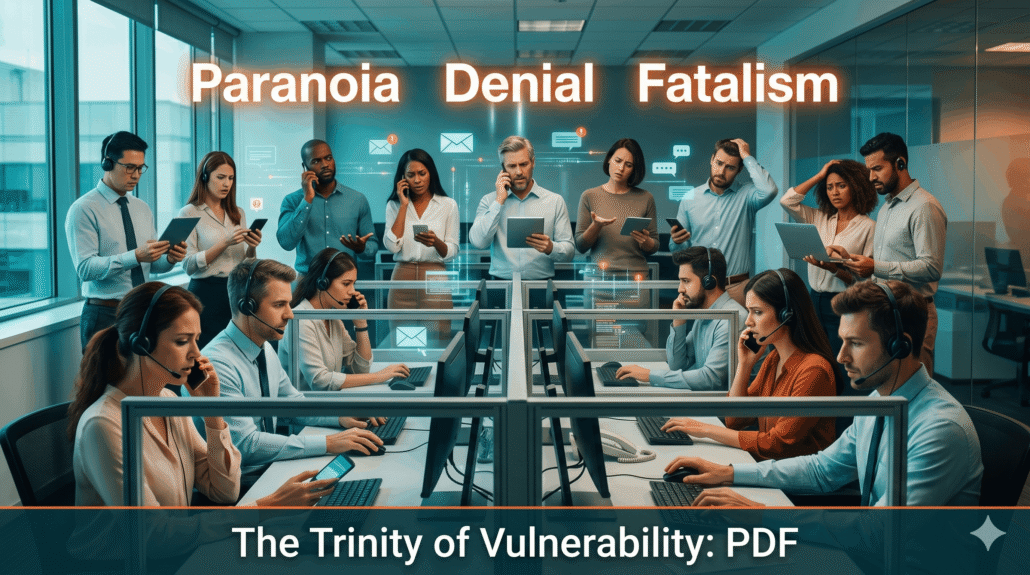
Defining the PDF Framework of Paranoia, Denial and Fatalism: The Trinity of Vulnerability

This methodology wasn’t born in a sterile laboratory, nor was it cooked up by a corporate marketing committee looking to sell software. It was forged over thirty years on the road, standing on thousands of stages, staring into the eyes of real people, hugging and crying with real victims and listening to the quiet admissions of shame that happen after the house lights come up.

The Trinity of Vulnerability

Over three decades, I have watched the threat landscape mutate from simple lock-picking and phone phreaking to the sophisticated hacking of human biology through artificial intelligence. But through it all, I have seen this framework consistently do what multi-million dollar tech stacks cannot: transform everyday people from passive, sitting-duck targets into active, sharp human detection layers.

While the mechanics of the Trinity of Vulnerability (PDF) are proprietary, the core architecture is inherently generic and universal. Anyone can apply it. The true variable, however, isn’t the framework itself—it’s the decades of live, real-time dialogue I’ve had with audiences that allows me to navigate the subtle nuances, the defensive excuses, and the precise psychological friction points where people either choose to engage or choose to surrender.

To the modern Chief Executive, Chief Information Security Officer, and Board Director, the 2026 threat landscape appears to be a war of technological attrition. We pour millions into zero-trust architectures, end-point detection, and perimeter defense, assuming the battlefield is digital.

“If you think technology can solve your security problems, then you don’t understand the problems and you don’t understand the technology.” Bruce Schneier

Yet, the costliest breaches of this year—the devastating ransomware attacks that lock down entire hospital networks, the heartbreaking scams that empty a family’s retirement nest egg, and the everyday payroll diversion frauds that steal a worker’s paycheck—share a damning commonality: They bypassed the firewall entirely by exploiting our internal human infrastructure.

Most organizations combat this with traditional, compliance-based phishing simulations. You send an email with a slightly misspelled domain name, track who clicks, force the “failures” into a fifteen-minute video module, and report a declining click rate to the Board. You call this risk management.

It isn’t. It is “Security Theater”. (also Bruce Schneier)

Compliance-based training fails because it assumes human vulnerability is an information problem. It operates under the flawed premise that if employees simply memorize a checklist of “scammer grammar” and technical red flags, they will act rationally.

But humans are not rational actors; we are biological organisms driven by evolutionary psychology. The true vulnerability is not a lack of knowledge; it is a sophisticated, self-justifying psychological loop that paralyzes your workforce.

To dismantle this threat, executives must look past technical hygiene and confront the Trinity of Vulnerability: The PDF Doom Loop™.

Defining the PDF Framework: The Trinity of Vulnerability

The PDF Framework comprises three deeply rooted cognitive distortions: Paranoia, Denial, and Fatalism. When these three psychological forces interact, they do not merely create passive obstacles; they form an aggressive, codependent ecosystem within the human Wetware (our biological brain). This ecosystem mutates the natural human tendency to “Default to Trust” which I call Human Blindspot™— into a weapon that cyber-criminals easily wield.

To understand why your security culture feels stagnant despite constant training, we must define the three vertices of this trinity:

1. Denial (The “Comfort” Shield)

Denial is humanity’s ancient mechanism for reducing immediate anxiety and avoiding conflict. In corporate security, Denial sounds like: “We have an elite IT department,” “Our software blocks everything,” or “I’m just an administrative assistant, nobody is targeting me.” It is far easier and cognitively “cheaper” to operate under the assumption of absolute safety than to constantly calculate the shifting risks of the Scamiverse. Denial creates the Human Blindspot™—a total inability to see the shark in the water because looking for it causes mental discomfort.

2. Fatalism (The “Surrender” Alibi)

Fatalism is the resignation that because technology is moving so fast, defense is mathematically impossible. In the era of Generative AI, voice cloning, and High-Precision Impersonation, Fatalism is skyrocketing.

It sounds like: “If the NSA can get hacked, what chance do I have?” or “AI can clone anyone’s voice perfectly now, so we’re all sitting ducks anyway.” Fatalism strips the employee of agency, shifting them into a completely passive state where they let the threat landscape happen to them.

3. Paranoia (The “Hyper-Vigilant” Smokescreen)

Paranoia in the corporate environment is a cultural misconception of what security actually is. It is a frantic, uneducated hyper-vigilance. Paranoid employees view every internal email as a trick, every security protocol as an administrative punishment, and the IT department as an adversary playing a game of “gotcha.”

Paranoia does not produce secure behavior; it produces severe alert fatigue, leading to cognitive burnout and eventual operational paralysis.

The PDF Doom Loop: A Self-Justifying Psychological Ecosystem

The true danger of the PDF framework lies in its mathematical, cyclical nature. These three mindsets do not exist in isolation. They form a self-sustaining loop where each distortion actively parents, justifies, and maintains the other.

Phase 1: The Friction Point (How Denial Breeds Paranoia)

An employee sits comfortably in a state of Denial. Suddenly, reality breaks through. Perhaps the company conducts an aggressive phishing simulation that tricks them, or the executive team issues an urgent memo about a competitor being devastated by an AI-cloned voice scam.

The baseline Denial is temporarily disrupted. The employee is forced to acknowledge that the threat is real and highly sophisticated.

However, because your compliance training has only taught them what the threat is, rather than how to confidently manage it, a power imbalance occurs. The brain cannot handle the calculation of an existential threat paired with zero personal defense strategies.

The pendulum swings violently from the comfort of Denial to the frantic state of Paranoia. The employee begins treating every digital interaction with blind, untargeted fear.

Phase 2: The Resulting Mutation (How Paranoia Justifies Fatalism)

Human biology cannot sustain a state of hyper-paranoia. It triggers a chronic cortisol release, blinding logical reasoning and causing severe mental exhaustion.

To save itself from burnout, the employee’s brain aggressively looks for a release valve to lower the anxiety. It finds that release valve in Fatalism.

The employee looks at the sheer scale of the threats they’ve been taught to fear and concludes: “This is simply too big for me. The hackers are geniuses, the technology is flawless, and I am just an employee. There is nothing I can do to stop this.” Paranoia mutates into an intellectual surrender.

Phase 3: The Codependent Alliance (How Fatalism Resurrects Denial)

This is the most critical and overlooked nuance of human risk management: Fatalism acts as the ultimate bodyguard for Denial. Living in constant fear of making a company-ending mistake is deeply uncomfortable. The brain demands comfort. By embracing Fatalism (“The hackers are all-powerful, resistance is futile”), the employee constructs a perfect logical alibi to slip right back into Denial.

The internal script becomes: “Since a breach is completely inevitable, and absolutely nothing I do will change the outcome… I don’t need to change my behavior at all. I can go back to clicking what I want, trusting blindly, and letting IT handle the fallout.”

The loop is complete. Fatalism has successfully rehabilitated Denial, leaving the employee’s Human Blindspot™ completely wide open.

The Inaction Paradox: Why the Math Fails Your Risk Management

When your organization relies purely on compliance-based phishing simulations, which, of course, is putting the cart before the horse, you are inadvertently feeding this exact math loop. Traditional training relies on fear and compliance. It uses a “hammer” approach—scaring the employee with the threat, penalizing them if they fail a simulation, and forcing them to review a list of technical guidelines.

Is this how you guide your children or loved ones when they encounter a crisis? Is this how you treat your own family members when they reach out for protection? Of course not. Yet, this is exactly how we treat our workforces under the guise of compliance. We reduce them to simple metrics, failure rates, and percentages on a dashboard, when what they truly are is fallible humans who need your strategic expertise—and just a tinge of your empathy.

This approach completely fails the basic laws of risk management because it ignores the Inaction Paradox:

Denial + Fear-Based Compliance X Fatalism = Paranoia  (and Eventual Disengagement)

When you inject fear into an employee who lacks a simple, actionable defense protocol, you do not create a sharper observer; you create an exhausted, paranoid employee who eventually tunes out entirely.

Paranoia leads to the cultural assumption that security is a technical department’s job, not a personal responsibility. When everyone is paranoid, alert fatigue sets in, and employees default to trust simply to keep up with the speed of their daily operations.

Your declining click rates on phishing tests are a metric of Security Theater, not organizational resilience. Your employees haven’t become a tougher target; they’ve simply learned how to spot your specific, clumsy corporate simulations while remaining entirely vulnerable to the elegant, AI-driven social engineering happening in the real world.

The Breakthrough: Challenging the Core Belief Systems

To build an enterprise culture that can genuinely withstand modern threats, leadership must transition the workforce across the psychological spectrum: from a Low Agency state of compliance to a High Agency state of active defense. This requires an absolute refusal to let employees use Fatalism as an alibi for Denial. You must systematically dismantle the PDF framework by challenging the underlying psychology and biology of the employee through relatable, real-world paradigm shifts.

1. Cure Denial with Radical Proximity: “All Security is Personal”

Stop using generic data points, abstract corporate compliance warnings, or dry regulatory frameworks. To pierce the stubbornness of Denial, you must tap into the ultimate truth of human psychology: people protect what they love first and foremost. If you tell an employee to protect the company’s cloud database, their brain defaults to Denial because the risk feels distant, corporate, and abstract. But when you look them in the eye and say, “All security is personal,” the conversation shifts. You bridge the gap by focusing heavily on their Digital Health and what happens at their own Kitchen Table.

When you show an employee exactly how a predator in the Scamiverse can use a 3-second audio clip from their daughter’s public Instagram video to clone her voice, fake a kidnapping, and target their personal bank account, the denial shield instantly dissolves. They are no longer checking a box for HR. By teaching them the “muscle memory” required to secure their own families, their personal identities, and their children’s digital footprints, you inherently harden the enterprise. They bring those exact same protective habits back to their desks, transforming from passive targets into fierce defenders.

2. Smash Fatalism with High Agency: The “Locked Window” Strategy

Attackers are not omnipotent magicians or all-powerful entities; they are lazy, profit-driven opportunists looking for easy entry points. The belief that “resistance is futile” is an elegant excuse for intellectual laziness.

To completely expose the absurdity of Fatalism, look no further than traditional physical home security. Every single year, there are approximately 2 million burglaries in the United States. Yet, when you ask a live audience why some of them still don’t have a basic home security system or deadbolts, the common, exhausting answer is: “Well, my husband says if they really want to break in, they’re going to find a way to break in anyway. There’s not much we can do to protect ourselves.” Frankly, that wife should divorce that man for his fatalistic surrender of his family’s safety.

A burglar could throw a boulder through a sliding glass window, but they don’t want the noise, the attention, or the effort. They want an unlocked back door. The same rule applies to the Scamiverse. Cyber-criminals do not want to work hard. By implementing simple risk management—adding non-technical layers of friction and becoming a tougher target—you force the predator to move on to an easier victim. Fatalism falls apart the moment you realize that you don’t have to be completely unhackable; you just have to be harder to breach than the company next door.

3. Replace Paranoia with the Triple-A Protocol: System 1 vs. System 2

Do not demand hyper-vigilance 24/7; demand targeted, calm execution. Paranoia is an uneducated, erratic panic that leads to total alert fatigue. If your employees treat every internal calendar invite or routine email from accounting as an existential threat, they will burn out and turn their defenses off entirely just to survive their workday.

Replace the erratic panic of Paranoia with a precise, clinical methodology: the Triple-A Protocol.

Teach your workforce to view security like a scalpel, not a hammer. You do not need to walk through the office in a state of terror. Instead, you train your biological Wetware to switch from fast, emotional “System 1” thinking to slow, logical “System 2” calculation only when you feel a “gut ping”—a sudden instance of Manufactured Urgency or an unexpected financial request. When that trigger happens, the employee does not panic. They pause, step out of the emotional “Yes-Loop,” and calmly execute three simple, non-technical steps:

  • Analyze: Recognize the psychological hook, the sudden pressure, and the “Pattern Interrupt.”
  • Authenticate: Look past the digital mask, the spoofed email header, or the AI-cloned voice.
  • Act: Perform a mandatory Out-of-Band (OOB) verification by hanging up and contacting the sender through an entirely separate, trusted channel.

Conclusion: From Compliance to Appreciation

The modern enterprise cannot survive on compliance alone. As long as your security strategy ignores the psychological realities of the PDF Doom Loop, your millions spent on cyber-security software will remain a sunk cost, waiting for a single, fatalistic click to render them useless.

The ultimate breakthrough occurs when we bridge the Security Appreciation Gap. We must move our employees past the low agency mindset of checking a box to avoid punishment, and guide them into a state of active, strategic governance.

When you challenge the co-dependent loop of Denial and Fatalism, you strip away the alibis of inaction. You empower your people with the understanding that they are not passive targets in the face of an AI-driven threat landscape.

At the end of the day, I harbor no illusions about the immediate impact of this work in a world obsessed with shiny technological silver bullets. We live in a culture that would rather buy another piece of software than fix the broken wiring in our own “Wetware.” I will likely leave this earth someday, and it is only then, in the quiet evaluation of hindsight, that this framework will be credited for what it truly accomplished.

It won’t be remembered for a massive, disruptive technological revolution, but rather for the quiet, small changes in human behavior—the paused click, the verification phone call, the split-second rejection of a perfect lie—that saved families from ruin.

Because the goal was never the applause; it was building a Strategic Human Firewall™ strong enough to protect the kitchen table long after I’m gone.

Last thing, I have a favor to ask. Can you share this? Share it amongst your colleagues, share it amongst your IT department, share it in your socials. I mean really. Share it. Please.

Robert Siciliano CSP, CSI, CITRMS is the Architect of of The Strategic Human Firewall™ a methodology to mitigate the Human Blindspot™. He’s dedicated over 30+ years as a #1 Best Selling Amazon author of 5 books, and the architect of the CSI Protection certification; a Cyber Social Identity and Personal Protection security awareness training program. He is a frequent speaker and media commentator, and CEO of Safr.Me and Head Trainer at ProtectNowLLC.com.

Defending Your Legacy and Money from AI-Driven Deception: The Security Shift

The tactics used by digital predators have shifted from clumsy to calculated. For those building their wealth or approaching or enjoying retirement—and the financial professionals guiding them—the landscape is no longer about spotting typos. We have entered the era of the “Perfect Lie,” where generative AI crafts scams that are indistinguishable from reality.

The stakes are absolute. Protecting your assets requires more than just “being careful”; it requires building a Strategic Human Firewall™.

The Anatomy of the Human Blindspot™

Technical vulnerabilities are rarely the front door for a hack; 95% of breaches start with a conversation. This is due to the Human Blindspot™, an inherent psychological gap where our natural instincts work against us.

Evolution taught us to “default to trust” as a survival mechanism within a tribe. Today, scammers weaponize that same biology. By manufacturing a sense of extreme urgency—a frozen account or a relative in trouble—they trigger an “action bias.” Our brains stop analyzing and start reacting, effectively bypassing our critical thinking centers. Cybercriminals don’t just break into systems; they “hack” people by pulling on the levers of fear and affection.

The Rise of Synthetic Impersonation

The most significant shift today is the move from generic phishing to hyper-personalized AI attacks. Using as little as three seconds of audio harvested from a social media post, AI can clone a loved one’s voice with startling precision.

Imagine a “Grandparent Scam” where the voice on the other end isn’t a stranger, but a perfect digital replica of a grandson claiming he’s been in an accident abroad. It carries his specific tone, his slang, and his emotional franticness. This isn’t a future concept; it is a daily threat. In this environment, your ears can no longer be trusted to verify identity.

Recognizing the “Long Con”

Families must also stay vigilant against “Pig Butchering” schemes. These are slow-burn investment frauds where victims are “fattened up” through digital friendships or even faux romances.

AI allows criminals to manage thousands of these deep-rapport conversations simultaneously. They eventually steer the victim toward a fake “revolutionary” investment app or gold fund. The interface looks professional, showing massive “gains” that don’t exist. When the victim tries to cash out, the “friend” and the money vanish instantly. For retirees, the resulting emotional trauma is often as devastating as the financial ruin.

Fraud Forecast: 10 Scams Targeting Your Assets

Today, the “Human Blindspot” is being exploited by increasingly polished, AI-driven deceptions. Whether through a high-def voice clone or a perfectly spoofed tax alert, these top 10 scams are the primary threats to your financial peace of mind.

  1. AI Voice Cloning (The “Grandparent” 2.0): Using just seconds of audio from social media, scammers mimic a loved one’s voice perfectly to faking an emergency, accident, or arrest to demand immediate wire transfers.
  2. “Pig Butchering” (Long-Con Investment): Predators spend weeks building trust through text or dating apps, eventually “fattening up” victims before convincing them to move life savings into fraudulent crypto or gold platforms.
  3. IRS & SSA Impersonation: Scammers use spoofed numbers and AI-generated scripts to claim your Social Security number is “suspended” or you owe back taxes, threatening arrest unless paid via untraceable methods.
  4. QR Code Phishing (“Quishing”): Malicious QR codes placed in public or sent via email lead to “cloned” login pages designed to harvest bank credentials or Microsoft 365 passwords.
  5. Medicare Benefit “Updates”: Fraudsters pose as agents claiming you need a new “chipped” card or must verify your ID to keep coverage, seeking to steal your Medicare number for medical identity theft.
  6. The “Hello Pervert” Blackmail: A sophisticated email claim that your webcam was hacked while visiting sensitive sites. They demand Bitcoin to keep the “footage” from your contacts.
  7. Tech Support Pop-ups: Fake “System Infected” alerts provide a number to a “certified technician” who then gains remote access to your computer to install ransomware or drain accounts.
  8. Fake “Package Delivery” Texts: Smishing (SMS phishing) messages claiming a delivery is held for a “small fee,” leading to a form that steals your credit card info.
  9. Utility Shut-off Threats: Calls claiming your electricity or water will be cut within the hour due to an unpaid bill, pressuring you to pay via digital apps.
  10. Romance Scams: Predators create elaborate fake profiles to foster emotional dependency, eventually inventing a crisis that requires financial assistance.

The Defense: Always use Out-of-Band (OOB) verification—hang up and call the person or agency back on a known, trusted number.

Implementing the Triple-A Protocol

To neutralize these “perfect lies,” you must adopt a governance mindset known as the Triple-A Protocol:

  1. Analyze: If a message demands immediate secrecy or instant payment, treat it as a red flag immediately.
  2. Authenticate: Assume the initial medium (the call, text, or email) is compromised. Never trust the contact info provided within the alert itself.
  3. Act: Use Out-of-Band (OOB) verification. Hang up and call the person back on a trusted, pre-saved number.

Pro Tip: Every family should establish a “Challenge Code.” If a relative calls in a crisis, ask for the secret word. If they can’t provide it, you are talking to a deepfake.

Hardening Your Digital Infrastructure

While the human element is the primary target, your digital “locks” must still be secure. Advisors should emphasize these four non-negotiable habits:

  • Move Beyond Simple Passwords: If you can remember it easily, a computer can crack it instantly. Use a Password Manager (like 1Password) to generate and store unique, complex strings for every account.
  • Enforce Multi-Factor Authentication (MFA): This is your most vital safety net. By requiring a second proof of identity—like a code from an app—your accounts remain safe even if your password is stolen.
  • Eliminate “Update Procrastination”: Those “Update Available” pop-ups are often closing active security holes. If a device is over five years old and no longer receives patches, it has become a liability and should be retired.

The Advisor’s Evolving Role

The best advisors aren’t just focused on growth; they are focused on Asset Protection. Because victims often feel a sense of shame, advisors must cultivate a “safe harbor” environment where clients feel comfortable reporting suspicious activity early.

Securing your digital life isn’t about paranoia; it’s about Security Appreciation. It’s the ultimate guardian of your legacy, your ability to travel, and your long-term peace of mind. By acknowledging the Human Blindspot and utilizing the Triple-A Protocol, you cease to be a target and instead become a vital component of the Strategic Human Firewall.

Robert Siciliano CSP, CSI, CITRMS is a security expert and private investigator with 30+ years experience, #1 Best Selling Amazon author of 5 books, and the architect of the CSI Protection certification; a Cyber Social Identity and Personal Protection security awareness training program. He is a frequent speaker and media commentator, and CEO of Safr.Me and Head Trainer at ProtectNowLLC.com.

Stop Training the Wrong Part of the Brain: The Biological Mandate for The Strategic Human Firewall™

The Verdict

We must collectively admit that “Security Awareness” is dead. It failed. It failed because it was built on a fallacy, and the Scamiverse knows exactly how to exploit that weakness. Continuing with the status quo isn’t just inefficient; it is negligent.

To survive modern, AI-driven social engineering, your organization must evolve beyond traditional security awareness. The legacy industry has been selling you a band-aid for an arterial bleed. Adopting this approach is not just about deploying a new protocol; it demands that you lead a behavioral paradigm shift within a corporate culture heavily addicted to the cheap, easily measurable Compliance Illusion.

The nature of the threat has mutated, utilizing High-Precision Impersonation and automated Digital Frankensteins to perfectly target your people. Yet, the corporate response remains stuck in 2010: watch a video, take a quiz, click ‘compliant.’

We are treating a behavioral crisis with administrative paperwork. To survive, we must stop building “awareness” and start engineering biological reflexes.

The Industry’s Fatal Flaw: The Cognitive Fallacy

Current industry standards for security training rely entirely on the prefrontal cortex—the part of the brain responsible for logic, reasoning, and complex planning. The fundamental assumption is this: If we give employees enough data (policies, compliance videos, simulated phishing results), they will rationally apply that data when an attack occurs. This is biologically false.

The modern human predator does not attack the prefrontal cortex; they attack the amygdala, the brain’s emotional epicenter and “threat detector.” They accomplish this through Manufactured Urgency. When a criminal clones a CEO’s voice or creates a realistic, time-sensitive financial crisis, they are not initiating a cognitive debate. They are triggering a physiological fight-or-flight response. Adrenaline floods the Wetware, shutting down rational thought to prioritize immediate action (Action Bias).

The industry is training the logical brain, but the attack hits the reflexive brain. You cannot expect a policy document remembered from a 15-minute training video to survive a psychological hijack. The Human Blindspot—our innate tendency to default to trust under pressure—ensures that logic will always be bypassed when Manufactured Urgency is deployed correctly.

Actual defense does not live in memory. It lives in engineered muscle memory. We must replace rules with reflexes: the Triple-A Protocol (Analyze, Authenticate, Act) must become the biological, habitual response to anxiety-inducing digital requests.

Tonya Turrell of TechnologyMatch and Robert discussing The Strategic Human Firewall™

The Brutal Reality

Evolving an organization beyond Passive Security Theater by incorporating the active defense of a Strategic Human Firewall™ is a necessary, yet challenging, step. While adding this foundational biological layer is tactically superior for actual defense, it demands more effort, creates intentional friction in business workflows (by forcing pauses), and disrupts the comfort of relying solely on existing compliance metrics.

Because this methodology requires an intentional behavioral evolution—moving from passive compliance to active defense—it often triggers natural resistance from corporate leadership. Here are the top five objections currently defending legacy compliance programs, and the strategic rebuttals needed to shatter them.

The Objection Handling Matrix: Counteracting Corporate Stagnation

The Source: Chief Learning Officer

The Excuse/Objection: “We already invest heavily in phishing simulations and annual compliance modules. Are you telling us to throw all of that away?”

The Strategic Rebuttal: Not at all. The Strategic Human Firewall™ is not designed to replace your existing compliance modules or phishing simulations; it serves as their essential, foundational prerequisite. Right now, you are putting the cart before the horse. By engineering your team’s biological reflexes before you deliver traditional testing, you ensure they actually possess the defensive skills necessary to succeed, rather than simply generating another failed metric.

The Source: Board of Directors

The Excuse/Objection: How do we measure this? Legacy training provides easy metrics: ‘Click rates are down by 2%,’ or ‘98% completed the video.’ We need clean data.”

The Strategic Rebuttal: This is the metric fallacy. You are measuring activity, not efficacy. Tricking an employee with a “gotcha” phishing simulation only measures how easy it is to exploit the Human Blindspot™—it does not teach a defensive skill. The industry is addicted to the easy-to-measure Compliance Illusion. Actual safety isn’t found in a dashboard completion rate; it is found in the quantifiable application of Out-of-Band (OOB) Verification protocols during live, high-pressure business transactions. The true metric of a Strategic Human Firewall™ is the number of legitimate threats intercepted by a trained reflex, not how many employees passed a quiz.

The Source: HR Director / Legal

The Excuse/Objection: “Your approach and language are too aggressive. We are focusing on corporate ‘belonging’ and psychological safety. This ‘predator vs. prey’ narrative will make employees uncomfortable.”

The Strategic Rebuttal: Comfort is the ally of the Scamiverse. The organized criminal syndicates targeting your payroll—populated by sociopaths, psychopaths, and narcissists—do not care about your corporate ‘belonging.’ They view your employees as targets, not colleagues. To defend them, we must adopt The Seatbelt Analogy. A seatbelt is not a pleasant accessory; it is safety equipment designed for a lethal reality. We are not creating fear; we are replacing fear with empowering, hardened protocols like the Triple-A Protocol. True psychological safety is providing employees with the engineered reflexes required to protect themselves and the company without falling victim to manipulation.

The Source: Chief Operating Officer (COO)

The Excuse/Objection: “This sounds like it slows down the business. You are asking our VPs to pause and call a trusted number to verify every urgent financial or data request. This friction costs time and money.”

The Strategic Rebuttal: We prioritize accuracy over lethal speed. The “friction” you are objecting to is the engineered pause necessary to prevent catastrophe. It is the seconds-long application of OOB Verification versus the months-long recovery from a million-dollar business email compromise. You are currently vulnerable to the biological trigger of Action Bias—the urge to act fast to reduce anxiety. Attackers exploit this daily. You are not sacrificing speed; you are sacrificing vulnerability. A single successful AI-driven wire transfer fraud costs exponentially more than the collective time spent verifying high-risk instructions.

The Source: CISO

The Excuse/Objection: “Our technical firewalls are solid. These ‘biological’ attacks are a small subset. We should focus our budget on better endpoint detection rather than intense behavioral modification.”

The Strategic Rebuttal: Tech is necessary, but not sufficient. Technical firewalls stop code, not conversations. Criminals know your tech is strong, which is precisely why they target the soft perimeter of your Wetware. Attackers utilize High-Precision Impersonation specifically because they cannot use malware. Tech only hardening makes your employees the only target. If you leave your employees exposed to Manufactured Urgency and AI voice cloning, they will bypass every technical control you have in place by providing access or credentials willingly to a threat they believe is real. The Strategic Human Firewall™ is the endpoint detection system for human engineering.

The Source: C-Suite Leadership”

The Excuse/Objection: We are compliant. We meet the audit standards for ISO or SOC 2. The annual training requirement has been checked off. Why fix what isn’t legally broken?”

The Strategic Rebuttal: Compliance is a floor, not a ceiling. Relying on an administrative checkmark from a generic IT video assumes the audit standards have kept pace with AI-driven social engineering. They have not. The modern legal landscape is shifting. If you deploy a check-the-box strategy that you know is tactically ineffective against voice cloning or deepfakes, you are increasing your liability, not reducing it. Surviving the Scamiverse requires tactical defenses, not administrative apathy.

The Mandate

We must stop treating our employees as the “weakest link” and start engineering them into our strongest defense. Continuing to prioritize easily measured administrative paperwork over difficult behavioral change is a willful decision to remain vulnerable.

The industry must evolve past the Compliance Illusion. We must prioritize accuracy over anxiety, reflexes over rules, and biological engineering over passive awareness.

The Strategic Human Firewall™ methodology reverses this failure. It operates exactly like an expert wilderness guide sitting down with a group of novice hikers. Before handing out heavy gear or demanding strict adherence to trail rules, the guide unfolds the map and explicitly details the terrain and the lethal predators actually hunting in the woods.

This approach acknowledges a foundational biological truth: all security is personal first. If employees do not understand how the Scamiverse targets their personal bank accounts, their aging parents, or their own identities using High-Precision Impersonation, they will never intrinsically care about protecting corporate data.

By exposing how Manufactured Urgency hijacks their personal Wetware, the threat becomes real and visceral. Once employees recognize their own individual vulnerability, the entire paradigm shifts. They are no longer just checking a box to satisfy HR. With the personal risk fully understood, traditional compliance training suddenly transforms from a meaningless administrative chore into a highly valued, practical survival map.

You must decide which organization you want to lead: the one that passed the audit, or the one that survived the attack.

Robert Siciliano CSP, CSI, CITRMS is a security expert and private investigator with 30+ years experience, #1 Best Selling Amazon author of 5 books, and the architect of the CSI Protection certification; a Cyber Social Identity and Personal Protection security awareness training program. He is a frequent speaker and media commentator, and CEO of Safr.Me and Head Trainer at ProtectNowLLC.com.

5 Self-Defense Mistakes That Are Making You a Target

In today’s unpredictable world, personal safety is less about being an MMA fighter and more about being prepared. While an “ounce of prevention” is the best defense, knowing how to react when a situation escalates is vital.

The following guide combines classic situational awareness with modern non-lethal technology to help you navigate the world with confidence.

1. The Power of Prevention and Awareness

Most attackers seek an unsuspecting, “easy” target. You can drastically reduce your risk by following these fundamental rules:

  • Stay in the Light: Stick to well-lit areas and avoid walking or parking near large vans or obstacles that offer concealment for a predator.
  • The “Key” Strategy: When walking to your car, keep your longest key poking out between your fingers. It serves as an immediate, improvised tool for self-defense.
  • Trust Your Instincts: If a situation feels wrong, it probably is. If someone demands your property, hand it over—your life is worth more than any designer handbag.

2. When to Fight Back: The First Few Seconds

If an attacker touches you or escape is impossible, you have a narrow window to seize control.

  • Use Your Voice: Scream in a primal, “pissed-off” tone. Shouting “Get away!” or “Back off!” alerts others and signals to the offender that you are not a submissive victim.
  • Strike Vulnerable Points: Aim for the “soft” targets: eyes, nose, neck, knees, and groin.
  • Maximize Impact: Use the edge of your hand, your palm, or your elbow rather than just your fingers. A palm strike upward into the nose or a hard kick to the side of the knee can provide the seconds you need to run.

3. Modern Protection: Why REPULS® is a Game Changer

Traditional self-defense tools often come with high stakes. Firearms carry legal and lethal weight, while standard pepper sprays (OC) can be messy and dangerous to the user due to “blowback” and cross-contamination—especially in wind or indoors.

This is where REPULS® Defense Spray has revolutionized personal safety. Unlike oil-based pepper sprays, REPULS is a water-based irritant that offers several key advantages:

  • Immediate Incapacitation: It causes involuntary eye closure and disrupts an attacker’s focus instantly, giving you a clear window to escape.
  • Safe for Indoor Use: Because it doesn’t “fog” or linger like pepper spray, it’s the only irritant safe for use in cars, offices, or homes without affecting bystanders or the user.
  • Long-Range Accuracy: With a reach of up to 17–21 feet, it allows you to stop a threat before they are within arm’s reach.
  • Easy Cleanup: It is eco-friendly and can be mitigated with simple water, making it a professional-grade tool that is manageable for everyday citizens.

4. Practical Tips for Everyday Carry (EDC)

Having a tool is only effective if you can access it.

  • Don’t Dig: If you’re in a high-risk area (like a dark parking garage or an unfamiliar Uber), have your REPULS canister in your hand or clipped to an accessible pocket—not buried at the bottom of a purse.
  • Check Expiration: Traditional sprays last 1–2 years; REPULS offers a 5-year shelf life, but you should still inspect your gear regularly.
  • Practice Your Grip: Hold the canister in your palm with your thumb on the trigger to prevent it from being easily swatted away.

Conclusion

Self-defense is a mindset. By combining sharp situational awareness with a reliable, non-lethal tool like REPULS, you empower yourself to navigate daily life with peace of mind. Remember: the goal isn’t to “win” a fight—it’s to disrupt the threat and get home safely.

The Architect’s Blueprint: Defeating the “Digital Frankenstein” with a Strategic Human Firewall™

The digital perimeter as we once knew it has dissolved. We have entered the era of the “Scamiverse,” a high-velocity landscape run by organized criminals, using human trafficked slave labor in factories where the primary target of cyber-predators is no longer your network’s software, but your “Wetware”—the human brain. As we move through 2026, the greatest threat to our financial institutions, real estate closings, and family legacies is not a line of malicious code, but the “Perfect Lie” delivered through AI-driven deepfakes and voice cloning.

Human Firewall

To survive this shift, organizations and individuals must move beyond the “Compliance Trap” of passive training. We must close the Security Appreciation Gap and build a Strategic Human Firewall™—a defense system designed to neutralize the Human Blindspot™ before a single dollar leaves the account.

The Evolution of the Scamiverse: From Phishing to High-Precision Impersonation

For decades, security was a game of spotting “scammer grammar” and clumsy emails. Today, the game has changed. With over 105,000 AI-driven attacks reported annually in the U.S., the barrier to entry for criminals has vanished. Scammers now utilize Generative Adversarial Networks (GANs) using platforms such as FraudGPT, and GhostGPT generating sophisticated phishing emails and Voice Synthesis to clone a human identity for as little as $5. In high-stakes industries like Real Estate and Finance, these “Digital Puppets” are being used to facilitate massive wire fraud by impersonating sellers, attorneys, and CFOs with terrifying accuracy.

How the “Digital Mask” is Created

  1. Neural Puppetry: Using GANs, a “generator” creates fake content while a “discriminator” attempts to detect flaws. They train each other in a loop until the output is hyper-realistic.
  2. Voice Synthesis: By analyzing “vocal biomarkers”—pitch, accent, and breathing—AI can clone a voice from just 3 to 30 seconds of audio scraped from a LinkedIn video or a social media post.
  3. Network Injection: Sophisticated hackers bypass standard webcams to feed pre-generated or real-time AI video directly into platforms like Zoom or Teams, making the person on the other side of your screen a literal Digital Frankenstein.

The Human Blindspot™: Why We Are Hard-Wired to Fail

The reason these attacks work is not due to a lack of “awareness,” but because of the Human Blindspot™. Humans are biologically programmed to “Default to Trust.” When we hear a familiar voice or see a recognizable face, our brains bypass critical thinking and switch into “Action Bias.”

Criminals weaponize this biology by creating Manufactured Urgency. They manufacture a crisis—a pending tax penalty, an expiring real estate deal, or a family emergency—to cloud our judgment. When the brain is in a state of high-speed emotional reaction, we ignore the subtle “glitches” in the synthetic media. This is the Silent Failure: a breach that triggers no technical alarms because the human authorized it.

The Strategic Human Firewall™: Moving from Awareness to Appreciation

Most organizations suffer from Security Theater—running training that looks good on paper but fails in the field. To combat AI, we must move from Awareness (knowing a threat exists) to Security Appreciation (valuing the protection of the legacy enough to act).

The Strategic Human Firewall™ is a permanent governance mindset. It shifts the workforce from being a liability to becoming a proactive Human Sensor Network. The foundation of this firewall is the Triple-A Protocol.

The Triple-A Protocol: Your “Break the Fake” Playbook

  1. Analyze: Recognize Manufactured Urgency. The moment a request demands “secrecy” or “immediate action,” stop. Your brain has moved into emotional reaction. Take a breath to move back into analytical thinking.
  2. Authenticate: Identify the “Digital Mask.” Treat every digital communication as a potential breach. Look for the technical and biological “red flags” of a deepfake.
  3. Act: Execute Out-of-Band (OOB) Verification. Never use the contact information provided in the suspicious message. Hang up and call the person back on a trusted, pre-validated number.

Best Practices: Identifying the “Digital Mask”

Detection is moving from visual inspection to a mix of biological and technical analysis. To build your firewall, you must train your “Human Sensors” to look for specific anomalies.

Sensory Red Flags

Visual – Unnatural or rigid blinking; a “locked” head where the face moves but the shoulders remain static; blurry edges at the hairline or jewelry.

Physical – “Waxy”” or botoxed skin textures; distorted teeth during speech; shadows and reflections that don’t match the background environment.

Audio – Robotic or flat cadence; a suspicious lack of natural “filler” sounds (breaths, sniffs); electronic “clicks” or “glued” words.

Real-Time Intervention: Active Challenges

If a video call feels “off,” perform these active challenges to disrupt the AI’s rendering:

  • The Profile View: Ask the participant to turn their head 90° to the side. Most real-time models are trained on frontal views and will “break” or dissolve in profile.
  • Physical Occlusion: Ask them to wave their hand in front of their face or scratch their nose. This causes the AI “overlay” to flicker or glitch as it struggles to map the obstruction.
  • Knowledge Check: Ask a question not findable on social media or in hacked email threads (e.g., “What was the name of the dog you had in third grade?”).

Operational Friction: The Only Real Defense

The most effective defense is not software; it is Operational Friction. In a world of AI-driven speed, the goal of the Strategic Human Firewall™ is to slow down the Momentum of a Crisis.

For Businesses & Professionals

  • “Never Trust, Always Verify”: Implement a layered security posture. Use Multi-Factor Authentication (MFA) and require multi-party authorization for all wire transfers.
  • The Three-Step Playbook: If a call is suspicious: Flag (verbally pause the call), Isolate (move them to a waiting room), and Escalate (use a secondary channel like an internal phone to verify).
  • Wet-Ink Signatures: For high-value closings, insist on in-person verification or “wet-ink” signatures in the presence of a verified notary.

For Individuals & Families

  • The Family Codeword: Establish a secret phrase to verify identity during “emergency” or “grandparent” scams. If the person on the phone can’t provide the word, it’s a clone.
  • Limit Biometric Exposure: Make social media profiles private. Stop providing the “raw materials” for your own deepfake by letting strangers scrape your voice and likeness.

Conclusion: Resilient Defense in a Synthetic World

As we fight against the Ebbinghaus Curve—the principle that humans forget 90% of training within a week—we must commit to continuous building of “Security Muscle Memory.”

The “Human-in-the-Loop” is no longer just a phrase; it is the final line of defense. By closing the Security Appreciation Gap and implementing the Strategic Human Firewall™, we move from being “accidental victims” to becoming Hard Targets. In the age of AI deception, the only way to protect the “Closing Table” and the “Kitchen Table” is to recognize that security isn’t a tech problem—it’s a human commitment.

Robert Siciliano CSP, CSI, CITRMS is a security expert and private investigator with 30+ years experience, #1 Best Selling Amazon author of 5 books, and the architect of the CSI Protection certification; a Cyber Social Identity and Personal Protection security awareness training program. He is a frequent speaker and media commentator, and CEO of Safr.Me and Head Trainer at ProtectNowLLC.com.

Is Your Soulmate a Deepfake? How AI is Supercharging the Scam That Could Cost You Everything

The landscape of love has become a battlefield. For millions of Americans, the quest for connection begins with a swipe, a like, or a seemingly innocent “wrong number” text message. But behind the screen, a sinister evolution is taking place. The era of the clumsy, broken-English scammer is over. In its place rises a new, terrifying adversary: Artificial Intelligence.

Soulmate a Deepfake

We are witnessing the industrialization of heartbreak. Organized crime syndicates have weaponized AI to transform romance scams from simple con games into sophisticated, high-tech operations. This is no longer just about lonely individuals losing a few dollars; it is a global enterprise focused on systematically dismantling your bank account by hacking your heart.

The Rise of Industrialized Deception

Gone are the days of the “lone wolf” scammer operating from a frantic internet café. Today’s romance scams are likely run by organized crime groups operating out of massive, factory-like compounds, primarily in Southeast Asia. These are not chaotic operations; they are businesses. They have scripts, quotas, and management tiers.

However, the true force multiplier is AI. In the past, a scammer could only juggle a handful of victims before slipping up—forgetting a name, mixing up a story, or succumbing to fatigue. Now, Large Language Models (LLMs) allow criminals to automate the seduction. AI chatbots can maintain fluent, grammatically perfect, and deeply empathetic conversations with thousands of victims simultaneously, 24/7. These bots never sleep, they never forget a birthday, and they know exactly what to say to trigger an emotional response.

The Death of “Proof”: Deepfakes and the End of Verification

For years, the golden rule of online dating safety was simple: “If they won’t video call, it’s a scam.” Or, for the savvy dater: “Send me a selfie holding a spoon to prove you’re real.”

In 2026, those tests are obsolete.

Generative AI has killed the concept of “seeing is believing.” Scammers can now use image generators to create specific, custom selfies in seconds. Even more alarming is the accessibility of real-time deepfake technology. A scammer can project the face of a stunning model over their own during a live video call, complete with voice synthesis that matches the persona. You can look into their eyes, hear their voice, and watch them move, all while interacting with a digital hallucination designed to disarm you.

The Human Blindspot™: Why We Fall for the Machine

Why is this so effective? The answer lies in The Human Blindspot™.

The Human Blindspot represents the psychological gap between what we see and what we perceive, driven by our biological need for connection. When we are lonely or seeking validation, our brains are flooded with dopamine at the first sign of romantic interest. This chemical reaction creates a cognitive tunnel vision. We want the beautiful stranger to be real, so we subconsciously ignore the red flags.

This blindspot is where the AI strikes. By perfectly mirroring our communication styles and feeding us the validation we crave, the AI bypasses our skepticism. It exploits our biases, particularly the “It Won’t Happen to Me” bias.

Interestingly, this blindspot is statistically larger for men. Despite the stereotype of the lonely woman falling for a scammer, data reveals that men—particularly middle-aged men—are disproportionately targeted and more likely to lose money. They are often less suspicious of random friend requests from attractive strangers, a vulnerability that scammers exploit with ruthless efficiency. The shame associated with this—falling for a pretty face that turned out to be a computer code run by a crime syndicate—leads to massive underreporting. Victims would rather suffer in silence than admit they were duped by a “romance” that never existed.

Building The Strategic Human Firewall™

If technology is the weapon, then psychology must be the shield. To survive the age of AI fraud, we must adopt the mindset of a Strategic Human Firewall™.

In cybersecurity, a firewall monitors traffic and blocks threats. A Human Firewall applies this logic to personal interactions. It is the conscious decision to move from a state of implicit trust to a state of “Zero Trust” regarding digital strangers.

The Strategic Human Firewall acknowledges that the Human Blindspot exists. It manages risk not by avoiding technology, but by slowing down the emotional velocity of the interaction. It involves compartmentalizing your emotions from your finances. When a user acts as a firewall, they refuse to let the dopamine rush dictate their actions. They verify, they question, and they recognize that in the digital age, intimacy without proximity is a calculated risk.

The Trap: How the Scam Unfolds

The playbook is consistent. It starts with a “serendipitous” text or a match. The conversation moves rapidly from the dating app to an encrypted platform like WhatsApp or Telegram—this is a crucial move to take you away from the dating app’s safety moderation tools.

Love bombing ensues. The AI learns your insecurities and soothes them. Then, the pivot occurs. A sudden emergency, a “frozen” bank account, or an exclusive cryptocurrency investment opportunity that the scammer “wants to share with you for our future.” Once the money is sent, the mask falls, and the digital ghost vanishes.

Top 10 Tips to Stay Safe in the Age of AI Scams

To harden your Strategic Human Firewall and protect yourself from the next generation of romance fraud, follow these essential rules:

  1. The “Zero Trust” Financial Rule: Never, under any circumstances, send money, cryptocurrency, gift cards, or wire transfers to someone you have not met in person. No exceptions.
  2. Reverse Search Everything: Do not just search the photo. Take screenshots of the text messages and the bio. Run them through search engines. AI often reuses successful scripts.
  3. Challenge the Deepfake: If you video call, ask them to do complex, specific movements (e.g., “turn your head all the way to the side” or “wave your hand in front of your face”). Deepfakes often glitch when objects pass in front of the face or at extreme angles.
  4. Slow the Tempo: Scammers want to rush intimacy to trigger your Blindspot. Deliberately slow the relationship down. If they get angry or desperate, it’s a scam.
  5. Keep it on the App: Refuse to move to WhatsApp, Telegram, or Signal until you have met in person. Dating apps have safety features that scammers hate.
  6. Guard Your Data: Do not reveal your home address, workplace, or specific birthdate early on. These details can be used for identity theft or to make the scam seem more “real.”
  7. Consult a “Truth Teller”: Show the profile and messages to a skeptical friend or family member. A third party without the emotional attachment (and the dopamine hit) will spot the red flags you are missing.
  8. Beware the “Investor”: If a romantic interest mentions “crypto,” “investing,” or “teaching you how to trade,” block them immediately. This is the hallmark of the “Pig Butchering” scam.
  9. Audit Your Privacy: Scammers target you based on public info. Lock down your social media so they can’t build a persona perfectly tailored to your hobbies and history.
  10. Break the Silence: If you suspect you’ve been scammed, report it to the FBI’s IC3 and the FTC. Overcoming the shame is the only way to help authorities track these industrial operations.

Conclusion

The integration of AI into criminal enterprise has fundamentally changed the nature of online trust. The enemy is no longer just a liar; it is a learning machine designed to deceive. By acknowledging our Human Blindspots and erecting a Strategic Human Firewall, we can navigate the digital world safely. Real love doesn’t ask for your crypto wallet password on the third date. Stay vigilant, stay skeptical, and keep your heart guarded until the person on the screen proves they are real.

Robert Siciliano CSP, CSI, CITRMS is a security expert and private investigator with 30+ years experience, #1 Best Selling Amazon author of 5 books, and the architect of the CSI Protection certification; a Cyber Social Identity and Personal Protection security awareness training program. He is a frequent speaker and media commentator, and CEO of Safr.Me and Head Trainer at ProtectNowLLC.com.